Breeden Wiring Systems · Globally connected, Indiana rooted
Move a difficult harness program toward a buildable release.
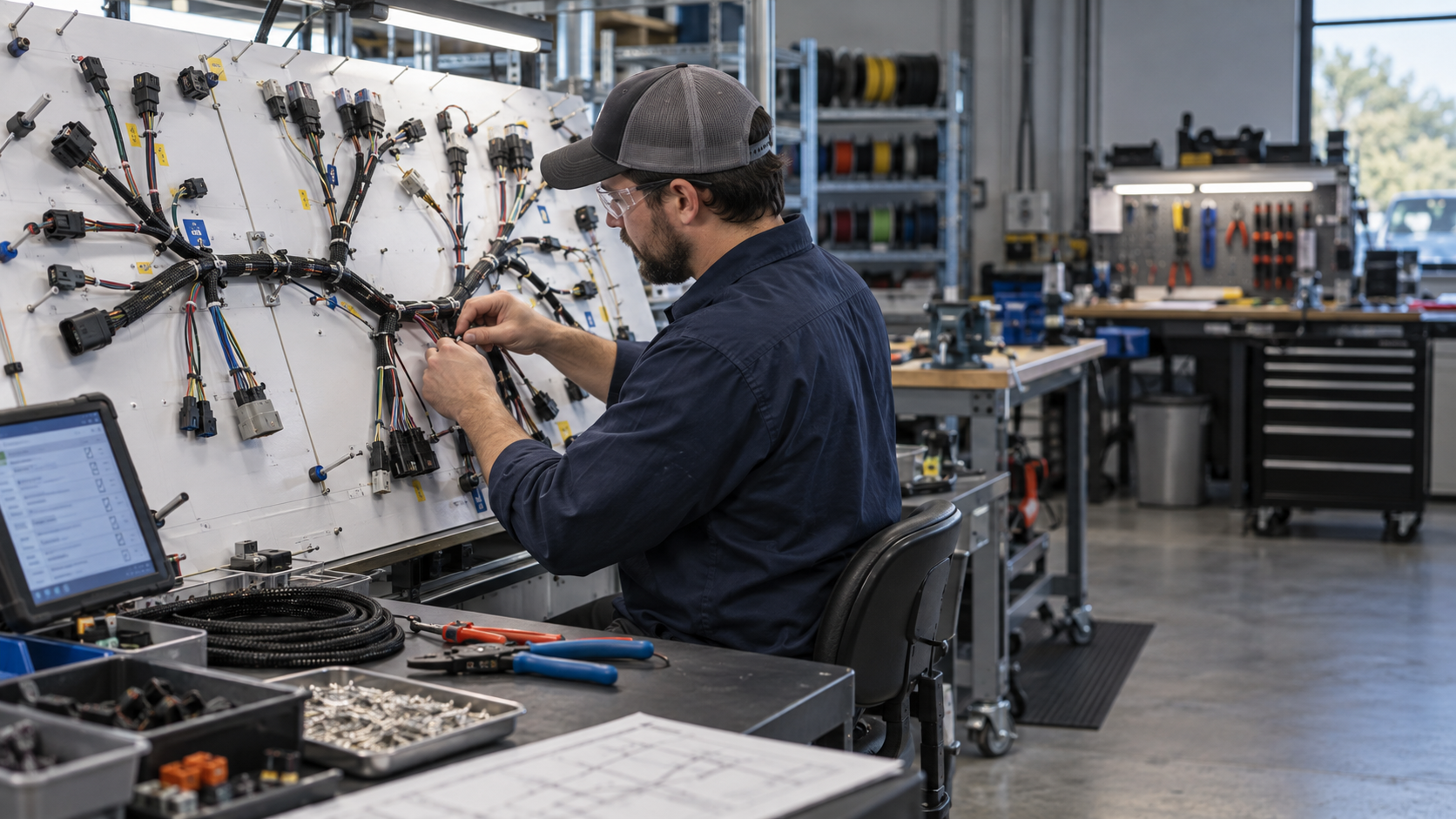
BWS works as an extension of your engineering team—from recovering incomplete design inputs through controlled engineering, sourcing and test readiness, prototype learning, issue closure, and production handoff.
- Human-led engineering
- Structured design data
- Evidence-based release

Vision 2035 · globally connected, Indiana rooted
Connect engineering truth to work people can build, verify, and carry forward.
BWS is developing an engineering-led model that links customer need, structured product definition, material readiness, test evidence, prototype learning, quality closure, and production handoff. The ambition is global in reach and practical at home: use experience gathered across industries and regions to strengthen customers, people, suppliers, and manufacturing capability from Indiana outward.
Three ways to begin
Start with the constraint that is holding the program back.
You do not need a perfect RFQ. Bring the information you have and the decision you need to make next.
Recover, define, or improve the design.
Use this path when requirements are incomplete, files disagree, packaging is changing, or the engineering team needs focused harness support.
- Input and gap review
- Requirements and architecture
- Connectivity, routing, drawings, and BOMs
Prove the design and make the package usable.
Use this path when test architecture, fixtures, prototype build, quality planning, quoting, or supplier transfer is exposing unanswered questions.
- Verification and test-system planning
- Prototype learning and issue closure
- Release-readiness and technical RFQ package
Keep engineering context connected through sourcing.
Use this path when BWS should help define the work, prepare the technical package, and support a controlled manufacturing path.
- Engineering scope and deliverables
- Supplier-neutral qualification support
- Controlled questions, revisions, and transfer
The current BWS strategy
Connect engineering, material, test, quality, and delivery ownership.
The operating model is built around named owners, reviewable gates, controlled evidence, and a steady handoff from customer need to production-ready work. BWS can lead the full thread or enter at the phase creating the most risk.
Keep requirements, design, revisions, and decisions connected.
Recover fragmented inputs, establish a controlled baseline, and preserve change impact and approval ownership.
Build the verification path around the use case.
Define test architecture, interfaces, fixtures, programming, acceptance evidence, validation, and training as scoped for the program.
Treat sourcing and kitting risk as engineering inputs.
Verify specifications, approved sources, alternates, lead-time exposure, kit completeness, tooling implications, and traceability needs before release.
Resolve the failure and the reason it escaped.
Use containment, traceability, structured root-cause analysis, verification builds, and controlled updates to drawings, processes, inspection, and training.
What BWS is accountable for
Engineering work that leaves a usable decision trail.
BWS is the delivery organization behind the work. The engagement is structured around controlled inputs, named decisions, reviewable outputs, and a clear handoff—not an open community promise or an automated answer.
A controlled design basis
Requirements, interfaces, environment, assumptions, gaps, owners, and the decisions needed before detail work begins.
- Input and gap assessment
- Requirements and interface baseline
- Open-decision and risk register
A reviewable harness definition
Connectivity, components, wire and protection, routing context, drawings, BOM information, variants, and revision ownership.
- Architecture and detailed design
- Digital engineering and change review
- Manufacturability-oriented documentation
Evidence from test, prototype, and review
A disciplined loop for electrical test, fit, function, installation, service, assembly, inspection, and documentation learning.
- Test and prototype planning
- Issue, observation, and disposition records
- Occurrence and escape-cause closure
A controlled, supplier-ready handoff
A portable technical package with acceptance evidence, questions, approval boundaries, revision controls, and support through the selected manufacturing path.
- Technical RFQ and release package
- Supplier questions and controlled clarification
- Quality, change, and production gates
Customer authorityYour team retains product decisions, approvals, intellectual-property control, and production-release authority.
BWS roleWe provide engineering structure, analysis, documentation, prototype learning, and handoff support as an extension of your team.
AI boundaryApproved AI may assist organization and drafting; qualified people review the engineering and authorize controlled outputs.
Anonymized working example
From fragmented design inputs to a controlled prototype package.
This generalized example reflects a recurring engagement pattern. It contains no customer identity, proprietary design content, or unsupported performance claim.
The program had drawings, spreadsheets, component decisions, and physical constraints—but no dependable engineering baseline.
Changes were difficult to evaluate because connectivity, mechanical context, component information, and revision ownership were spread across disconnected sources.
- 01Diagnose
Inventory inputs, expose conflicts and missing decisions, and agree on the design basis.
- 02Structure
Organize connectivity, components, interfaces, constraints, and revision rules around a governed record.
- 03Engineer
Develop the reviewable harness definition and connect open issues to owners and evidence.
- 04Learn
Use prototype and fit-check observations to make controlled corrections before transfer.
DeliverablesGap assessment · controlled design basis · drawings/BOM context · prototype package · issue record
Defensible outcomeA reviewable engineering package with clearer open decisions and a controlled path to prototype and supplier discussion.
See the proof frameworkWhere this work applies
Mobile, off-road, electrified, and industrial systems.
The engineering approach adapts to the application, operating environment, program maturity, and applicable requirements.
Automotive + EVTruck + busMining + agricultureEngines + gensetsBattery storageIndustrial + mission equipment
Military, export-controlled, regulated, or customer-restricted programs require project-specific eligibility, data, quality, cybersecurity, and compliance review. No blanket qualification is implied.
Two sites, two jobs
BWS delivers the work. WireHarness.ai helps the industry shape what comes next.
Use this BWS site when you need accountable engineering support for a real program. Use WireHarness.ai when you want to explore the broader process, contribute a nonconfidential idea, or propose a governed industry project.
Guided first conversation
Describe the challenge—not a perfect scope.
Choose a few basics. The page creates a reviewable email draft in your own mail application. Your form answers are not stored or sent automatically.
Do not include passwords, payment information, controlled data, or confidential files in the first message.