Fit and installation
Check routing context, breakout position, length, bend, mounting, clearance, access, and service considerations against the available application information.
 Breeden Wiring Systems
Start your prototype scope
Prototype and build-learning support · Available through BWS
Tell us what the harness needs to demonstrate and when. BWS develops the build basis with expert input from wire harness engineers and industry professionals, then builds or coordinates the prototype path and carries useful observations back into the design.
A prototype is a learning step. Release and recurring production require their own reviewed evidence.
Questions a working harness can answer
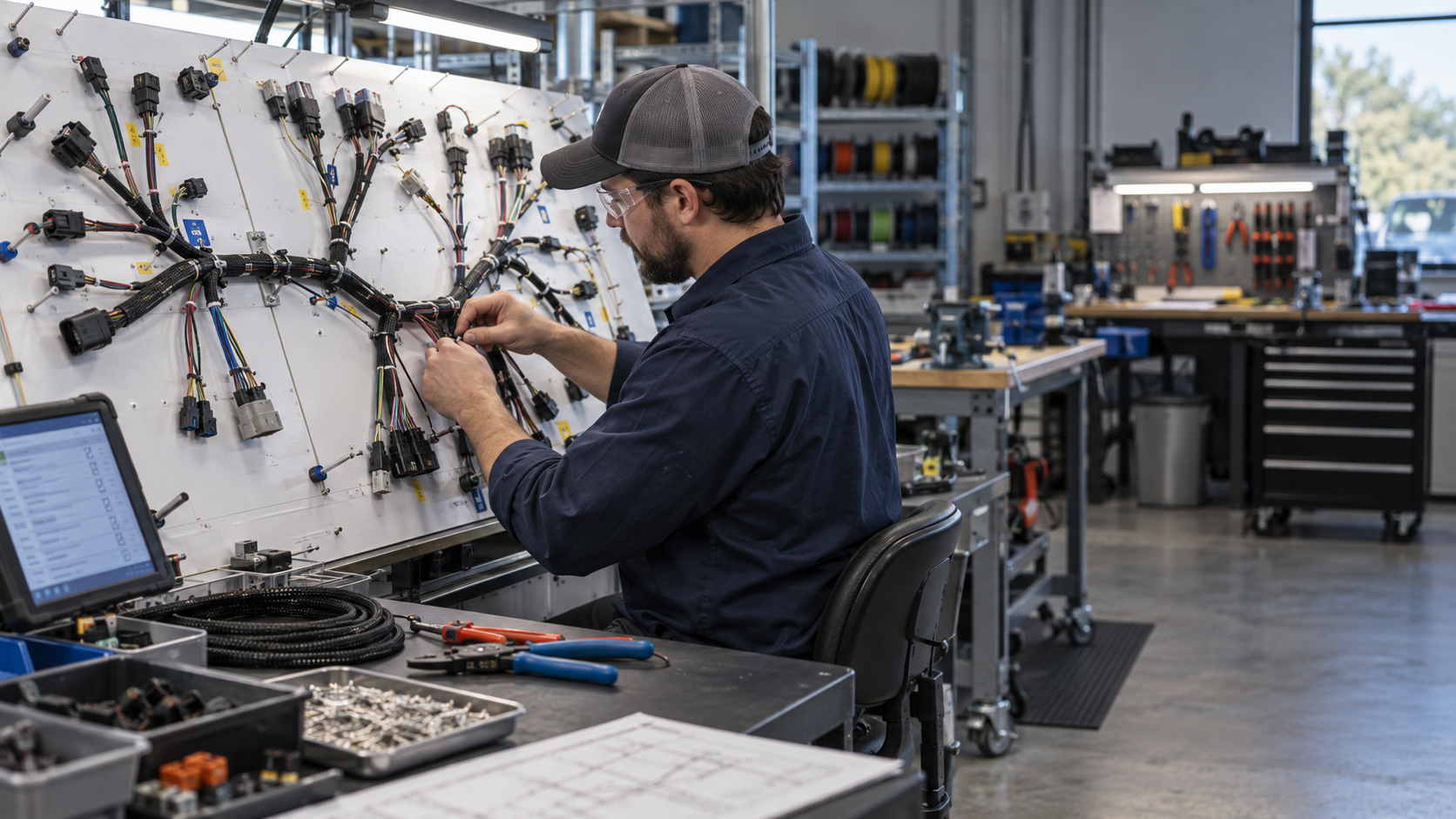
The useful result is not only a physical harness. It is clearer evidence about fit, assembly, installation, function, and the design changes needed next.
Check routing context, breakout position, length, bend, mounting, clearance, access, and service considerations against the available application information.
Observe build sequence, material behavior, protection, labels, tooling needs, and difficult or ambiguous work instructions.
Prepare and apply the continuity, interface, or project-specific checks defined in the reviewed scope and record what they establish.
Separate observed facts from assumptions, review changes, and carry accepted corrections into the relevant design information and revision path.
Build, observe, update
BWS connects the physical build to the design basis so useful lessons do not disappear at handoff.
Confirm the known requirements, available files, open questions, materials, and purpose of the prototype.
Prepare the work around the application, quantity, location, timing, and evidence needed from the physical build.
Record relevant fit, assembly, installation, test, material, and sourcing findings without treating every observation as an approved change.
Resolve the important questions and carry accepted revisions into the next design, prototype, supplier, or production decision.
Important: a working prototype does not by itself establish design release, production readiness, recurring capacity, or customer acceptance.
Start with what you have
You can begin with an existing design, a physical sample, partial connectivity, equipment context, or simply the result the working harness needs to demonstrate.
Need design support first? →Get a working harness
The current scope remains in your browser until you prepare an email or download a copy. It does not automatically create a project record, production authorization, or request number.